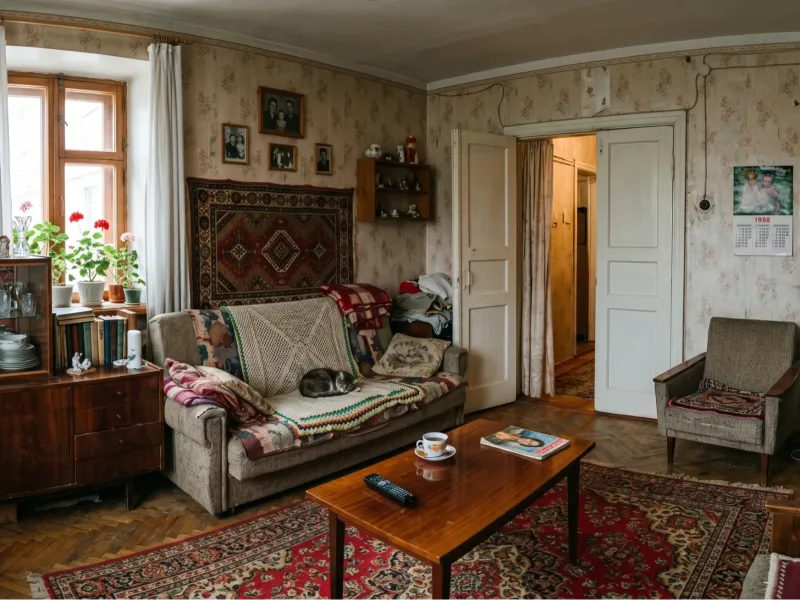

A dated interior, damage from a fire or a flood, or an inherited ‘grandma’s flat’ does not make an apartment unsellable. You can sell an apartment that needs renovation in Riga, and renovating first does not always pay. What matters is knowing what buyers and banks check, what to sort out before the deal and when selling as is makes more sense.
Selling an apartment that needs renovation: is it worth renovating first?
Renovating before a sale means spending money that may not come back. Three honest questions help:
- Money and time. Renovation needs cash up front and takes weeks or months, while the bills and property tax (NĪN) keep coming.
- Taste. Many buyers want to fit out a home themselves, so your tiles or flooring may add little for them.
- Surprises. In older buildings, opening up walls and floors can reveal worn-out wiring or pipes.
Often cheap steps are enough: clean, clear out, fix small faults and take good photos. Costs vary widely, so get a written quote and compare it with the price rise the work could realistically bring. If you do renovate, keep it legal and keep the receipts: documented improvement costs can affect the capital gains tax calculation if tax is due (check with the State Revenue Service, VID).
What buyers and banks check in an apartment in poor condition
- The building. Many Riga flats are in Soviet-era series blocks (the 103, 104, 119, 467 and 602 series, Lithuanian and Czech projects, Khrushchyovkas) or in Stalin-era and pre-war buildings. Buyers look at the roof, facade, stairwell, risers and whether the block has been renovated.
- Wiring. Original aluminium wiring is still found in older buildings, and buyers price in replacing it.
- Plumbing. Risers are common property maintained by the building manager; pipes and fittings inside the flat are usually the owner's own responsibility.
- Damp, mould, windows and balcony. These are visible at once and shape the first impression.
A mortgage buyer's bank orders a valuation from a certified valuer and expects clean paperwork. Poor condition can lower the valuation and unapproved alterations can make lending harder, so such flats attract fewer mortgage buyers and, on the open market, usually take longer to sell or sell for less.
An apartment in an emergency state
With dangerous damage (leaking pipes, faulty wiring, cracked ceilings), make the flat safe first: shut off the water and power and tell the building manager. You can still sell it, but the buyer must be told about the damage.
Unapproved re-planning: why it slows a sale
A removed partition, a kitchen opened into a living room, a glazed loggia: all common, but not always legal. Many alterations need documents approved by the building authority (būvvalde), and work on load-bearing structures needs a certified specialist's design. Without them it is unauthorised construction, which must be legalised or reversed, and that duty falls on the current owner even if a previous owner did the work. So buyers ask for a discount or walk away. You can legalise first (a project, approvals and time, and sometimes it is impossible) or sell to a buyer who takes the flat with the problem. Either way, do not hide it.
After a fire or a flood: the first steps
- Safety. Tell the building manager so the common pipes and structures can be checked.
- Evidence. Before cleaning or throwing anything away, photograph and film the damage and keep damaged parts.
- Insurance. If the flat was insured, notify the insurer at once and agree any repairs or disposal with them, or the claim may be disputed. Insurers may ask for the building manager's report or other evidence of what happened.
- Liability. Whoever caused the damage pays. A burst riser is for the building manager to inspect; if the water came from a neighbour's flat, you usually gather the evidence yourself.
- Clean-up. Remove ruined items, dry the rooms and treat any mould. A full renovation before selling is not required.
When you sell, say honestly what happened and what has been fixed, and if an insurance claim is still open, state in the contract who receives the payout.
Grandma's flat: inheritance, belongings and bills
The inheritance. A sworn notary handles the inheritance case, and your ownership must then be registered in the Land Register (Zemesgrāmata), because only the registered person counts as the owner. If the inheritance is not finalised, you can already sign a preliminary agreement with a buyer. For taxes and selling from abroad, see how to sell an inherited apartment in Riga.
The belongings. Set aside documents, photos, valuables and anything relatives want to keep; the rest can be given away, sold or removed. A direct buyer does not need the flat emptied, so you simply agree what stays.
The bills. Since 2026 the buyer of a voluntarily sold flat is liable for up to three years of unpaid management, utility, reserve fund and land use charges and can reclaim them from the seller (Apartment Property Law, Section 13.¹), so settle them or account for them openly.
A typical case. An heir inherits a parent's flat in a Khrushchyovka in very poor technical condition, with no money for renovation. A direct buyer purchases it as it is, and the money reaches the heir's account within days.
How to sell an apartment that needs renovation: open market or direct buyer
The open market (a broker or a listing on ss.lv) may bring a higher price if you have time and the flat appeals to buyers who want to renovate. The downsides: fewer mortgage buyers, discounts after viewings, a longer wait and the risk of a low bank valuation.
A direct buyer takes the flat as it is, even with paperwork problems. The price will be lower than in a perfect market scenario, because the buyer takes on the renovation and the risks, but you invest neither money nor months. For timelines and deal steps, see how to sell an apartment fast in Riga.
Be open about defects
Under the Civil Law, a seller is liable for hidden defects even without knowing about them (Section 1612), but not for those the buyer knew about or could have spotted with ordinary care (Section 1613). An agreement excluding liability does not protect a seller who knowingly concealed a defect (Sections 1617 and 1620). So describe the condition and known defects in the contract and the handover act.
How Riga Real Pro buys apartments in any condition
We buy apartments in Riga in any condition: unrenovated, half-renovated, in an emergency state, after a fire or a flood, grandma's flats included. We buy in every building series, from Khrushchyovkas and the 602 series to pre-war houses and new builds, and in every district, including flats with illegal re-planning, flats not commissioned or not privatised, and inherited flats during or after the inheritance process.
Our apartment buyout in Riga means a free valuation within 24 hours, an offer and, if you need it, an advance, one viewing by our own expert, and a contract signed before a sworn notary with the money in your account the same day. Without legal complications it all takes 1–3 days, or 3–5 days in complex cases. We cover all deal costs, charge no commission and clear out old furniture and unwanted belongings ourselves, at our own expense.
Frequently asked questions
Can I sell an apartment without renovating it?
Yes, on the open market or to a direct buyer, who purchases it as it is.
Do I have to tell the buyer about defects?
Yes. Sellers are liable for hidden defects, and knowingly concealing them can be costly.
Can I sell an apartment with unapproved re-planning?
Yes, but it is an obstacle for mortgage buyers. Legalise it first or sell to a buyer who takes the flat with the issue; we buy such apartments.
Must I empty the flat before selling?
On the open market an empty, clean flat shows better. If you sell to us, you do not need to empty it: we clear it out ourselves, at our own expense.
If your apartment needs work and you need a decision, send us a short request on this page. We will value the apartment as it is, free of charge, and make you an offer within 24 hours.