If a sworn bailiff has put an arrest on your apartment, or it is already listed for auction, you still have options. You cannot sell an apartment under a bailiff arrest in Latvia in the usual way, because the note in the Land Register (Zemesgrāmata) blocks registration of the sale. You can, however, sell it if the debt and enforcement costs are paid to the bailiff, often straight from the purchase price, and the auction is called off if everything is paid no later than seven days before it closes.
What a bailiff arrest and a Land Register note mean
A sworn bailiff (zvērināts tiesu izpildītājs, ZTI) starts enforcement when a creditor hands over an enforcement document, such as a court judgment. The debtor first receives a notice giving 10 days to pay voluntarily. If the debt is not paid and the creditor asks to enforce against the apartment, the bailiff applies for an enforcement note (piedziņas atzīme) in the Land Register. This is what people call an arrest.
From the moment you receive the bailiff's notice that enforcement is directed at the apartment, you may not sell, pledge or let it. The enforcement note blocks any voluntary registration by the owner, so a normal sale cannot be registered until the note is deleted.
A prohibition note (aizlieguma atzīme) is a different entry, made for example under a court order securing a claim in an ownership dispute, or at a bank's request where the mortgage agreement bars selling without its consent. Such an apartment can be sold only with the consent of whoever the note protects. Both notes appear in Part II, subsection 2 of the Land Register folio (mortgages in Part IV), which you can view on zemesgramata.lv.
How a forced auction works in Latvia: stages and timeline
- Notice and note. The bailiff asks the debtor to settle and applies for the enforcement note.
- Inventory. The bailiff describes the apartment, announcing the date in advance.
- Valuation. A certified valuer, at the debtor's expense, sets the forced-sale value, which is usually below market value. Within 10 days you can ask for a second valuation at your own cost.
- Announcement. The auction is published in the official gazette "Latvijas Vēstnesis" and on the e-auction site izsoles.ta.gov.lv, and must start within 10 working days of the notice being sent for publication.
- E-auction. Bidding starts at the forced-sale value and runs for 30 days. Bidders pay a deposit of 10% of the valuation; the debtor may not bid.
- Payment and approval. The winner pays within a month, and the court rules on the auction record within 30 days of the bailiff's application. The apartment is then registered to the buyer, and charges such as mortgages and prohibition notes are deleted.
- If nobody buys. Creditors may keep the apartment at the starting price; otherwise a second auction starts at 75% of the first starting price.
The statutory deadlines alone mean several months pass between the first notice and the end of the auction. That is your window to act.
Can you sell an apartment under a bailiff arrest?
Yes, but only together with the bailiff. The bailiff calculates the debt and enforcement costs; the buyer pays that amount out of the price into the bailiff's deposit account, and the rest is yours. The bailiff then asks the Land Register to delete the note and cancels the orders sent to banks, after which the buyer's ownership is registered. Every creditor and enforcement case must be settled. If the apartment is mortgaged, the bank's consent and repayment of the loan are needed too; see our guide on selling a mortgaged apartment. If there is no bailiff note yet but you have utility or tax arrears, read how to sell an apartment with debts in Riga.
How to stop the auction
- Pay the debt and enforcement costs in full no later than seven days before the closing date in the auction notice: the sale is cancelled and an auction already under way is stopped. The money can come from selling the apartment first.
- Agree with the creditor. The creditor can ask the bailiff to postpone the auction up to seven days before it closes; a concrete payment plan, such as a deal with a buyer, gives you something to negotiate with.
- Challenge unlawful actions. A bailiff's actions can be appealed to the district (city) court within 10 days, and the court may suspend the sale on a reasoned request. Speak to a lawyer first; this is not a way to buy time without grounds.
What happens to your bank accounts
The bailiff can freeze money in your accounts through electronic orders to banks. For a private individual, one bank must leave an amount equal to the monthly minimum wage for the debtor and each family member or dependant, and you can choose the account. Part of your salary can also be withheld. Once the debt and costs are paid, the bailiff cancels the orders and the accounts are unblocked.
The risks of waiting
- The debt grows: interest, the bailiff's fixed fee plus 15% of amounts recovered up to 4,269 euros, and costs for the inventory, valuation and auction. If the debt is not cleared within a year, the fixed fee rises by half.
- The price is lower: the auction starts at the forced-sale value, a second auction at 75% of that.
- Debt can remain: whatever the auction price does not cover is still your debt, including unpaid utility bills, as the 2026 "debt follows the apartment" rule does not apply to auction sales.
- You must move out: once the auction record is approved, the apartment is registered to the buyer.
Selling before the auction: open market or direct buyer
On the open market a buyer's bank cannot register a mortgage while the enforcement note is in place, and few cash buyers will deal with a bailiff; one may pay more, but finding them takes time. A direct buyer pays the bailiff itself and closes within days. The price is usually lower than a successful full-market sale, but you, not the auction, set the price and timing.
How Riga Real Pro buys apartments under a bailiff arrest
Riga Real Pro is a direct buyer with its own capital and has bought more than 1,000 apartments in Riga since 2006. When a bailiff has imposed an arrest or the property is up for auction, we clear all the debts and buy your apartment, handle everything with the bailiff ourselves and help unblock your bank accounts. You get a free valuation and offer within 24 hours (with an advance if needed); we pay the debt, obtain the document lifting the arrest, sign before a sworn notary and pay the balance into your account on the day of the deal, covering all transaction costs. With arrests and bailiffs this usually takes 3–5 days.
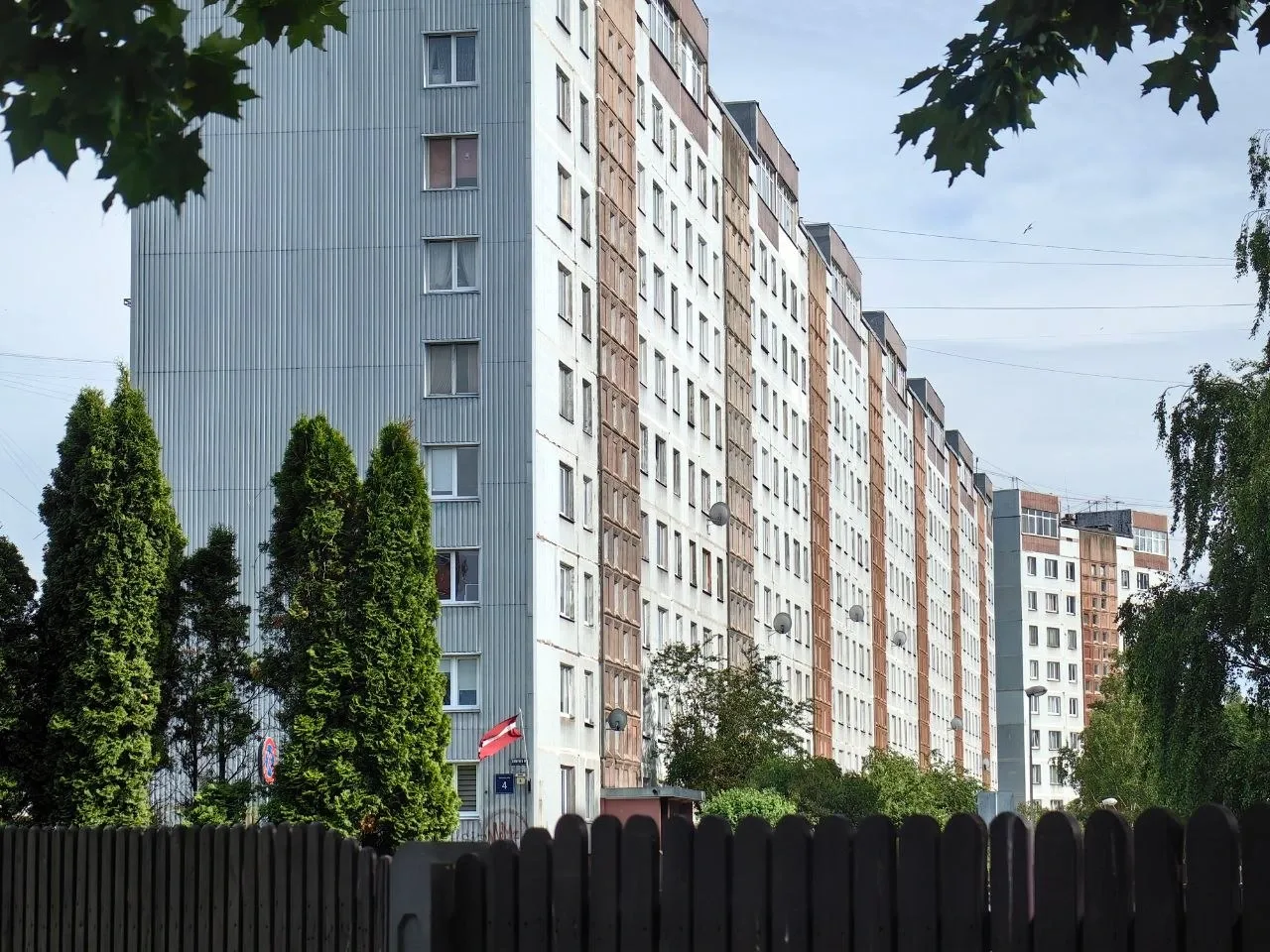
A typical case. An apartment in Ķengarags had been arrested by bailiffs over utility and tax debts, and the bailiffs kept calling the owner. We arranged the settlement of the debts and the removal of the encumbrance, the deal closed within 4 days, and the owner received the remaining amount in their account.
Learn more about our apartment buyout in Riga.
Frequently asked questions
Can I sell my apartment if a bailiff has arrested it?
Yes. The debt and enforcement costs are paid to the bailiff, often from the purchase price; the note is then deleted and the sale can be registered.
Until when can the auction be stopped?
Full payment of the debt and costs no later than seven days before the closing date in the auction notice cancels the sale. Within the same deadline the creditor can ask for a postponement.
What happens to my debts if the apartment is auctioned?
The proceeds go to the creditors in the order set by law; whatever remains unpaid is still your debt.
How fast can you buy an apartment under arrest?
Usually in 3–5 days, with an offer, and an advance if needed, within 24 hours.
If your apartment is under arrest or an auction has been announced, every week counts. Fill in the short form or call us: we will assess your situation free of charge and make you an offer within 24 hours.